How to Read an Xactimate Estimate

If you have filed a Property Insurance Claim, you will likely receive an estimate written in Xactimate. It may come from your insurance carrier’s adjuster, an independent adjuster, a Contractor, or from licensed public adjusters like the team at Loti.
For many homeowners, this document is confusing at first glance. It contains line items, codes, measurements, and pricing calculations that can feel technical and impersonal. However, understanding how to read an Xactimate estimate is one of the most important steps in managing your claim effectively.
This guide explains what it is, how it is structured, and what to look for.
What Is Xactimate?
Xactimate is estimating software widely used in the insurance and restoration industries. It provides standardized pricing for labor and materials based on geographic region and market conditions.
It is not an insurance Policy.
It is not a coverage decision.
It is a pricing tool used to calculate the cost of repairing, replacing, or cleaning damaged property.
Your insurance carrier may generate an Xactimate estimate to determine what they believe the repair should cost. Likewise, public adjusters or contractors may use Xactimate to produce their own version of the scope and pricing.
It is common for more than one Xactimate estimate to exist in a single claim.
How an Xactimate Estimate Is Structured
An Xactimate estimate breaks your claim into detailed components. Instead of simply saying “Kitchen repair,” it itemizes each task required to restore the space.
You will typically see:
Room by room organization
Line item descriptions for each repair task
Quantity and unit measurements
Pricing per unit
Depreciation calculations
Totals at the bottom of each section
The estimate is meant to represent the full Scope of Work required to return your property to its pre loss condition.
How Costs Are Broken Apart
An Xactimate estimate usually separates costs into categories such as:
1. Demolition and Tear Out
Removal of damaged materials, debris hauling, and disposal.
2. Cleaning and Mitigation
Smoke cleaning, water extraction, drying equipment, surface cleaning, and deodorization.
3. Repairs and Reconstruction
Framing, Drywall, flooring, cabinetry, painting, roofing, electrical, Plumbing, and Finish work.
4. Specialty Items
Custom features, high end materials, specialty finishes, or items requiring detailed documentation.
Each task is listed individually so that labor and materials are priced separately and transparently.
This structure allows the estimate to adjust if scope changes or supplements are needed.
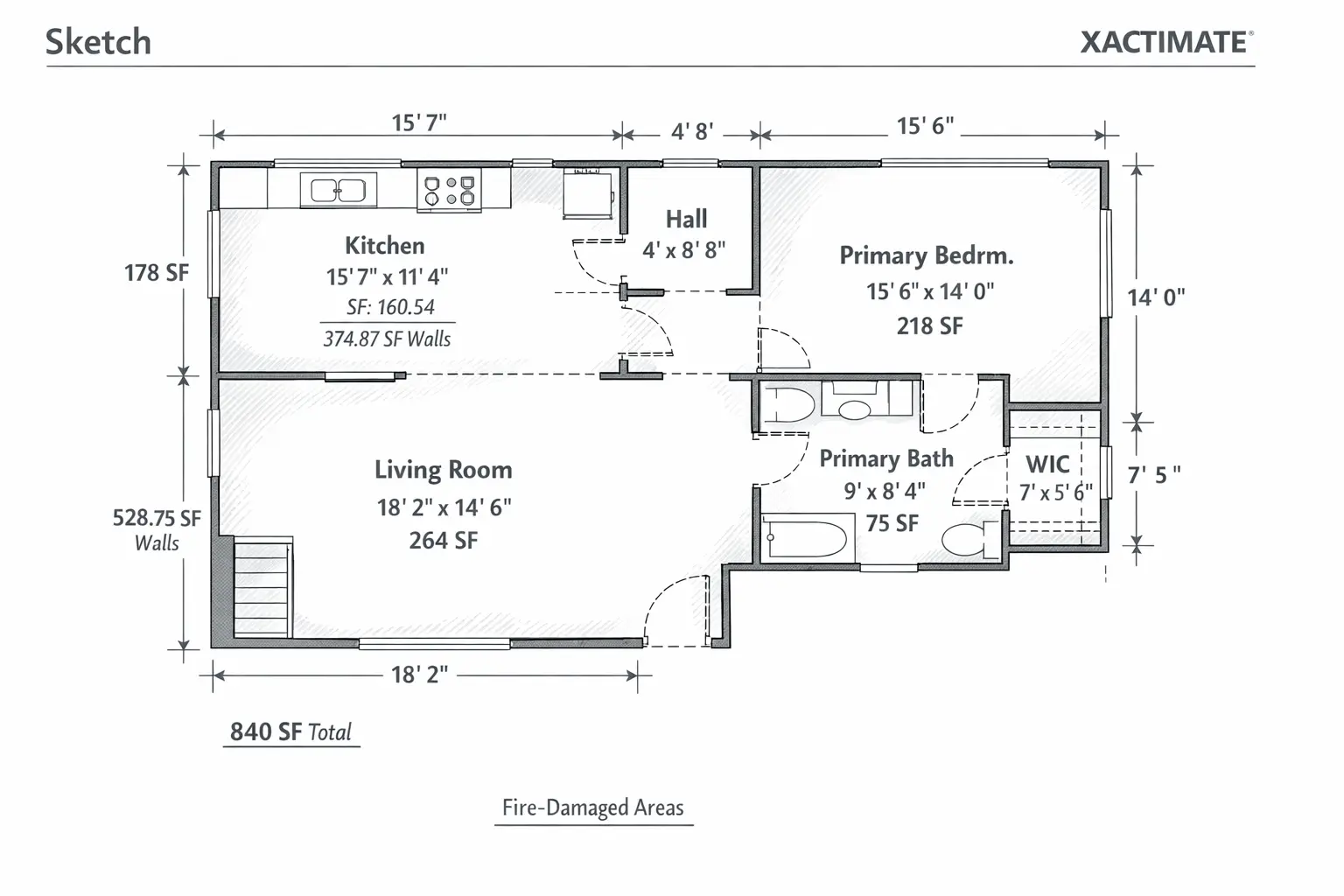
Understanding the 2D Sketch or Floor Plan
One of the most important parts of an Xactimate file is the 2D drawing, often called the “sketch.”
This is a digital floor plan of the affected areas of your home. It includes:
Room layout
Wall lengths
Ceiling heights
Openings such as doors and windows
Total square footage calculations
The sketch is not decorative. It drives the math behind the estimate.
For example:
Wall square footage determines drywall and paint quantities
Ceiling area affects Texture and repainting costs
Flooring square footage impacts material and labor totals
If the sketch measurements are incorrect, the pricing that flows from those measurements will also be incorrect.
Key Sketch Terms Explained
You may see terms such as:
Area
The total square footage of a room.
Perimeter
The total linear footage around the room.
Wall Surface Area
The calculated square footage of walls, often adjusted for doors and windows.
Ceiling Height
Used to calculate wall area and certain labor factors.
Openings
Doors, windows, or other cutouts that affect material quantities.
These measurements feed directly into the line item quantities listed in the estimate.
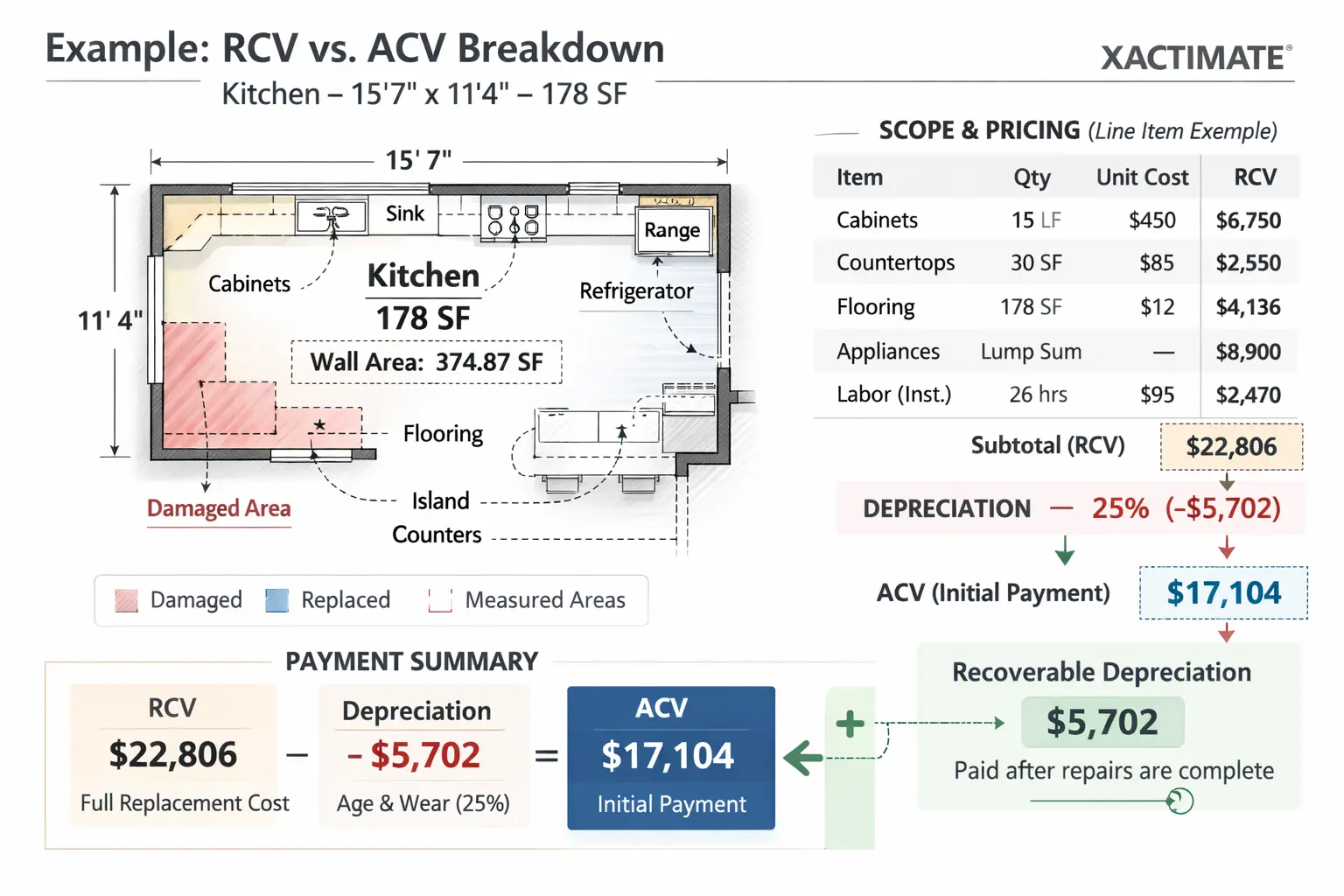
Replacement Cost vs. Actual Cash Value
Most Xactimate estimates will show:
RCV (Replacement Cost Value)
The full cost to repair or replace before depreciation.
Depreciation
The Deduction applied based on age and condition.
ACV (Actual Cash Value)
The depreciated amount often paid initially.
Understanding where depreciation is applied helps explain why the first payment may be lower than the total estimate.
Why Two Xactimate Estimates May Differ
It is common for estimates prepared by an insurance carrier and a Public Adjuster to differ.
Differences often arise from:
Scope omissions
Measurement discrepancies
Line items that were included or excluded
Code upgrade considerations
Material quality assumptions
Labor complexity factors
The software is the same. The interpretation and scope may not be.
What Homeowners Should Review Carefully
When reading your Xactimate estimate, focus on:
Are all damaged areas included?
Do the room measurements match reality?
Are materials listed consistent with what existed before the loss?
Is Overhead and Profit included if multiple trades are required?
Does the estimate reflect current rebuild costs?
An Xactimate file is not just paperwork. It is the financial blueprint of your rebuild.
Wrap-Up
An Xactimate estimate can feel technical, but it is ultimately a structured breakdown of your recovery costs. When you understand how it works, you gain clarity about what is included, what may be missing, and how your payments are calculated.
Whether the estimate was created by your insurance carrier or by licensed public adjusters working on your behalf, reading it carefully is one of the most important steps in protecting your outcome.